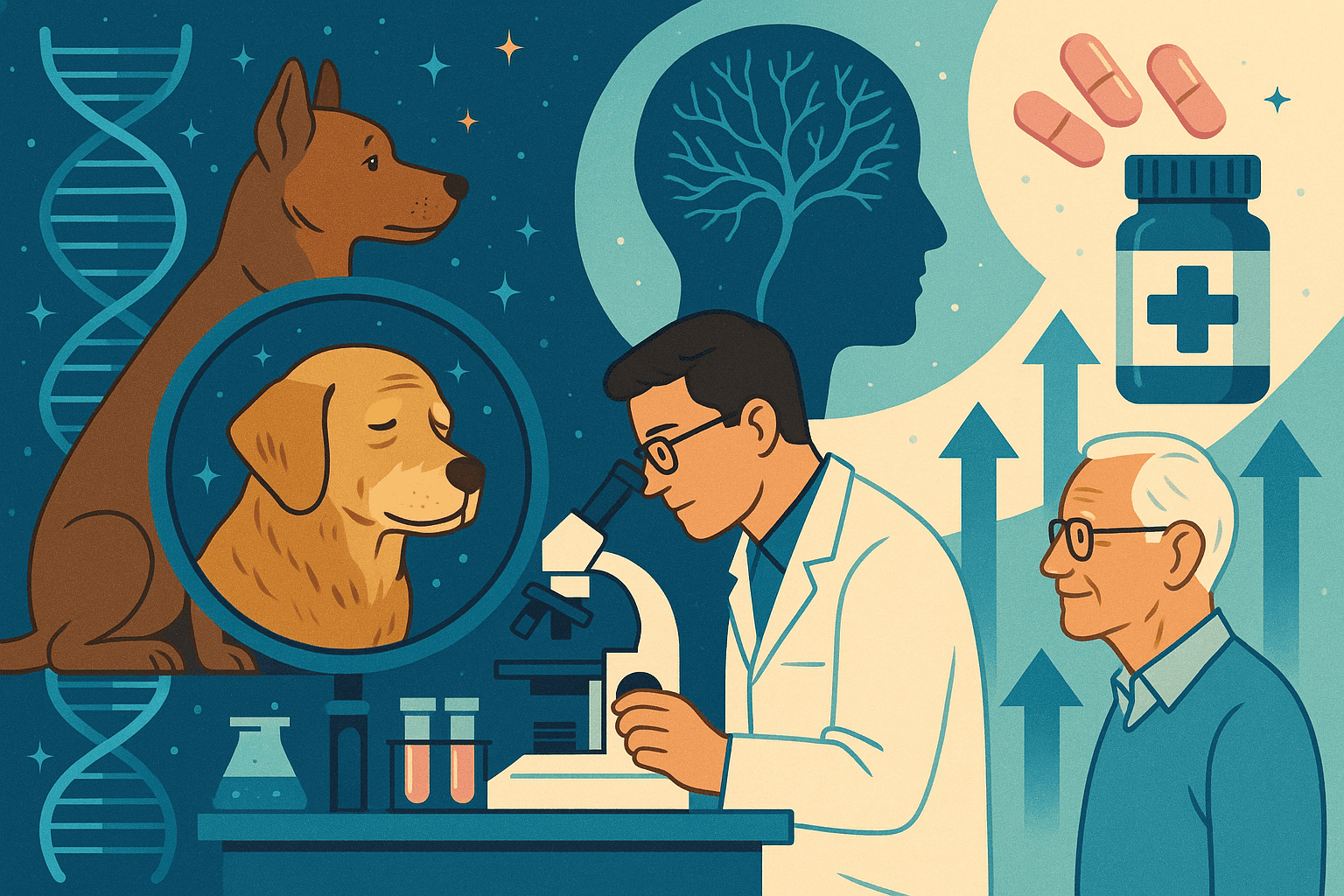
For centuries, dogs have earned their title as man's best friend through loyalty and companionship. Now, scientists believe our canine companions may offer something even more valuable: clues to unlocking the secrets of human longevity. As researchers race to understand the biology of aging, dogs have emerged as a surprisingly powerful model for anti-aging science—and the findings could benefit both species.
Why Dogs Make Ideal Aging Research Subjects
Dogs share our homes, our environments, and remarkably, many of the same age-related diseases that affect humans. Unlike laboratory mice, which live in controlled settings and rarely develop naturally occurring conditions like cancer or cognitive decline, dogs age in the real world alongside us. This makes them uniquely valuable for studying how genetics, environment, and lifestyle intersect to influence lifespan.
Perhaps most compelling is the sheer diversity within the species. A Great Dane and a Chihuahua are genetically similar enough to be classified as the same species, yet their lifespans differ dramatically—large breeds often live just 7 to 10 years, while small breeds can thrive for 15 years or more. This paradox has puzzled scientists for decades, since in most other species, larger body size correlates with longer life, not shorter.
The Dog Aging Project: A Landmark Study
One of the most ambitious efforts to decode canine aging is the Dog Aging Project, a large-scale, long-term study following tens of thousands of pet dogs across the United States. Researchers collect data on genetics, diet, environment, and health outcomes to identify biological markers of aging and test interventions that might extend both healthspan and lifespan.
A centerpiece of this research is rapamycin, a compound originally derived from bacteria found on Easter Island. Rapamycin has shown promise in extending lifespan in laboratory animals by modulating cellular pathways involved in aging, particularly the mTOR pathway, which regulates cell growth and metabolism. Early trials in middle-aged dogs suggest that low doses of rapamycin may improve heart function and potentially slow age-related decline, offering a tantalizing preview of what might be possible in humans.
What Dogs Teach Us About Cellular Aging
Beyond rapamycin, researchers are examining epigenetic changes in dogs—alterations in gene expression that occur with age but don't change the underlying DNA sequence. By comparing epigenetic "clocks" in dogs to those in humans, scientists can better calibrate biological age markers and test whether interventions that work in dogs might translate to people.
Dogs also experience a canine form of cognitive decline strikingly similar to Alzheimer's disease in humans, complete with amyloid plaque buildup in the brain. Studying this natural progression in dogs offers researchers a faster, more ethical pathway to testing potential treatments than waiting decades to observe similar changes in human patients.
Lessons for Human Longevity
The insights gained from canine aging research extend beyond veterinary medicine. Because dogs age roughly seven times faster than humans, scientists can observe the effects of anti-aging interventions within a few years rather than waiting decades. This accelerated timeline allows for quicker validation of promising compounds before advancing to human trials.
Additionally, studying why small dogs live longer than large ones may reveal fundamental biological principles about growth hormones, insulin-like growth factor 1 (IGF-1), and cellular repair mechanisms that could inform human longevity strategies.
What This Means for Pet Owners and the Public
While research continues, there are practical takeaways for those hoping to support healthy aging—for both dogs and humans:
- Maintain a healthy weight, as obesity accelerates aging processes in both species.
- Prioritize regular exercise, which supports cardiovascular and cognitive health.
- Consider preventive veterinary care, as early detection of age-related conditions improves outcomes.
- Stay informed about clinical trials, as pet owners may have opportunities to participate in cutting-edge aging research.
Conclusion
Dogs are proving to be far more than beloved companions—they are unwitting pioneers in the science of aging. By studying their biology, their diseases, and their responses to emerging anti-aging compounds like rapamycin, researchers are gaining unprecedented insight into the mechanisms of longevity. As this research progresses, it may ultimately help both dogs and their human counterparts enjoy longer, healthier lives together.